Infrared or Traditional Sauna? How to Choose for a Villa or Hotel in Bali
"Should we get an infrared sauna or a real one?" is one of the first questions villa owners ask us. Both are called saunas and both are sold as wellness, but they are very different products. The right choice depends on who will use it, where it will stand and what the electrical supply can handle.
How each one heats
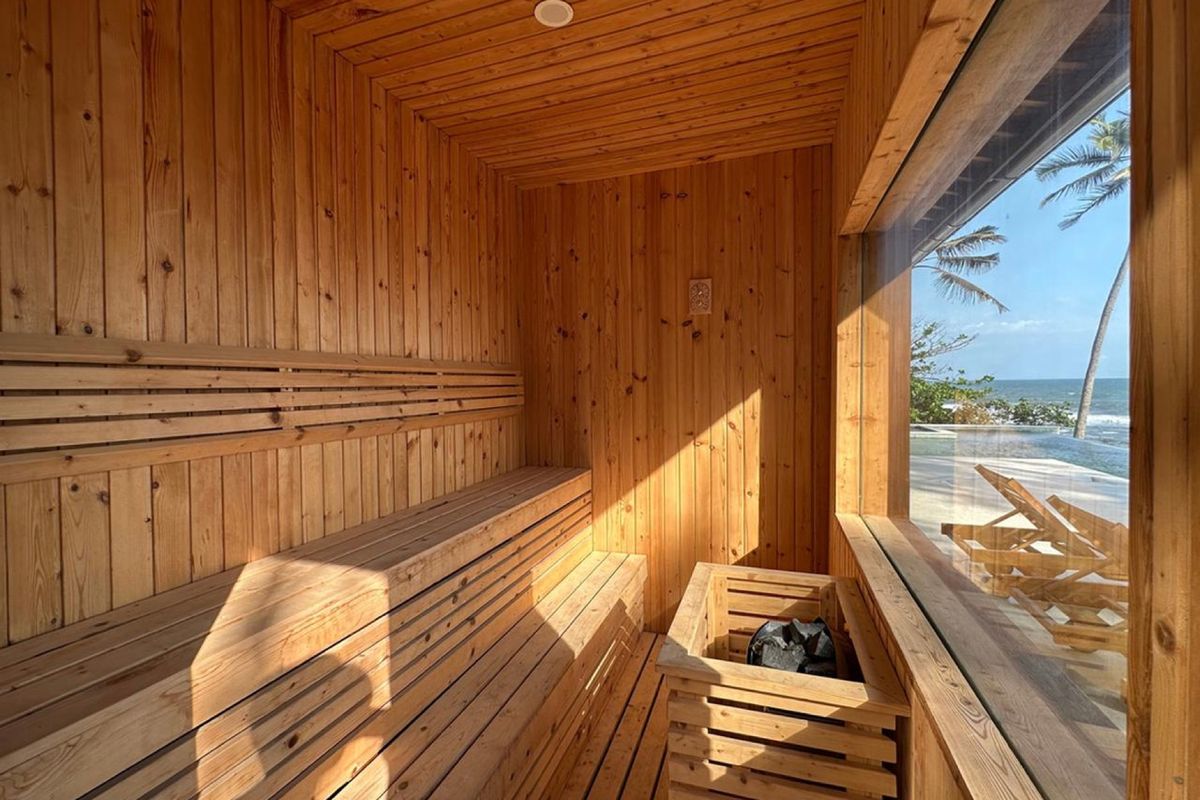
A traditional (Finnish) sauna heats the air. An electric heater warms a load of stones and the room reaches 70–100°C. Water poured on the stones releases a burst of steam, called löyly, which is the moment regular sauna users wait for.
An infrared sauna warms the body directly with infrared panels while the air stays at a milder 45–65°C. People sweat at a lower air temperature and the heat feels gentler. There are no stones and no steam.
Side by side
| Traditional | Infrared | |
|---|---|---|
| Air temperature | 70–100°C | 45–65°C |
| Warm-up time | 30–60 minutes | 10–20 minutes |
| Power | Usually a 6–12 kW heater, often three-phase | Usually 1.5–4 kW, single-phase |
| Capacity | 2 to 10+ people | Mostly 1–3 people |
| Steam (löyly) | Yes | No |
| Parts that need care | Heater and control unit | Panels and wiring in every wall |
| Best fit | Hotels, shared use, guests who know saunas | Apartments, small spaces, limited power |
What guests expect
Guests from countries with a strong sauna culture, such as the Nordics, Germany or Russia, usually expect a hot room with löyly, and an infrared cabin can disappoint them. Guests who mainly want relaxation or a recovery routine are often happy with infrared, because the gentler heat is easier to tolerate. For a hotel, or a villa let to international guests, a traditional sauna is the safer default. For a private owner who wants a daily routine in a small space, infrared makes sense.
The tropical factor
In Bali the air outside is often 28–32°C and humid. That shifts the comparison in two ways.
- Contrast. A 60°C infrared cabin in a 32°C garden feels less dramatic than it would in a cold country. A traditional sauna at 85°C still feels like a sauna and pairs naturally with a cold plunge.
- Electronics and humidity. Infrared panels and their wiring run through every wall. Outdoors in humid air they need a well-sealed cabin, and an indoor spot is kinder to them. A traditional sauna has one heater and one controller, both built for hot rooms, and is simpler to service on the island.
Timber, ventilation and heater sizing matter for both types. Our renovation site covers them in detail: sizing a sauna heater and choosing sauna wood for Bali.
Running costs
Infrared uses less electricity per session because it runs cooler and heats up faster. A traditional sauna uses more, but in a hotel that cost is shared across many guests per session. For a villa running the sauna once a day, the difference is small next to the air conditioning bill. The bigger cost question is usually the connection itself: a traditional heater may need a supply upgrade, an infrared cabin rarely does.
Can you have both?
Yes. Combination cabins with a stone heater and infrared panels exist, and some hotels install one room of each. If there is space for only one and the property hosts guests, we generally recommend traditional heat with a cold plunge next to it. Formats and prices are on our saunas and ice baths page.
FAQ
Is an infrared or a traditional sauna better for health?
Both are used for relaxation and recovery. They feel different: infrared is gentler, a traditional sauna is hotter and includes steam. Anyone with a medical condition should check with a doctor before using either.
Which is cheaper to install?
Usually an infrared cabin, because it is smaller and needs less electrical work. A built-in traditional sauna costs more but seats more people and holds up better to heavy commercial use.
Can an infrared sauna stand outdoors in Bali?
It can, in a well-sealed cabin under a roof, but an indoor or covered spot gives the panels a longer life.